Monday, 16 July 2012
fulmen -inis n. lightning bolt
Monday, 9 July 2012
equus -i m. horse
All these signs are motivated: English and French see a relationship between the animal as a whole and the protecting device, while German relates the protecting device to the relevant body part of the horse.
Moreover, French and German highlight the material the protecting device is made of, whereas English, by using shoe, takes an anthropocentric view of the scene.
Isn't language construal fascinating?
*This piece of knowledge comes courtesy of an extract in my linguistics textbook: Dirven & Verspoor (1998: 14-15) cited in Hendrikse et al. 2008. Approaches in Linguistics University of South Africa: Pretoria
Friday, 6 July 2012
Hispania -ae f. Spain
So I did some digging to find out why the initial 'f' and 'h' were interchanged in words of the same origin. I learnt that most Latin words that began with an 'f' followed by a vowel evolved into Spanish words (alone among Romance languages) as an 'h'. The reason for this change is still unknown, but it has been ascribed to Basque speakers, as the change was first documented in areas where many Basques were known to live. The theory is that the Basque language did not have an 'f' sound, and so substituted it for the nearest sound in their language, which was 'h'. However, this theory has been disputed.
Of course, I tried to come up with more examples of the 'f' - 'h' phenomenon. Can you think of any more?
hongo -- fungus
halcón - falcon
horno -- furnace
hablar -- fable
higo -- fig
horma - form
(hacer -- facere)
Wednesday, 4 July 2012
nummus -i m. coin
In my last post I referred to Peter Jones' article on the Royal Mint's new coins in celebration of the London Olympics. The man behind the coins mistakenly depicted Jupiter and Juno as the "Gods of Olympia" on the coins. Obviously these are the Roman gods, and not the Greek gods of Mount Olympus, who would have been more appropriate given that the Olympic Games originated in Greece in 776BCE.
![]() |
| The Olympic coins featuring Roman deities. |
In their Mythography workshop, my students designed their own Olympic coins, choosing Greek gods and sports that were appropriate to those gods. We came up with the following list of deities and sports. Can you add anything?
Poseidon, God of Water (and horses)
Water sports - Swimming, Diving, Kayaking, etc.
Equestrian sports - show jumping, dressage, etc.
Hermes, God of Travel
Running events - track events, Marathon, Triathlon, etc.
Ares, God of War
'Fighting' (or strength) sports - Wrestling, Boxing, Weight-lifting, Fencing, etc.
Apollo, God of Archery
Archery (Maybe Cupid could work here!)
Athena, Goddess of Wisdom
Javelin (she holds a spear, but this could also be Ares or even Artemis)
Hephaestus, God of Metalwork
Field events - Hammer throw, Shotput
And, of course, although there is no sport for her, special mention should be made of Nike, Goddess of Victory. I'm sure all the athletes will be praying to her...
![]() |
Monday, 2 July 2012
mythos -ou m. tale, story; graphé -és f. writing
Yes, all you pedants out there, I know that the title suggests more the writing of myths rather than any picture taking, but contrivance has always been catchy, and Mythography is really catching on! The students have four lessons a week, two for mythology and two for photography.
![]() |
| The Olympian Gods The gods lend their names to our study of mythology and the English language. |
![]() |
| Photography The rules of composition are a useful skill to take outside the classroom. |
Students also have the opportunity to learn the ancient Greek alphabet, as well a few appropriate transliterated words.
![]() |
| Greek Alphabet Students learn Greek words which have come into English directly (e.g. athlete). They also write their own names in ancient Greek! |
| Pandora's Box The inside holds 6 photographs of children in desperate situations, and 1 beautiful photograph of Hope, a happy, smiling child. |
The main assignment is a visual and written task in which students compose and capture three images relating to the myths leading up to the Trojan War. The subject matter of these images can be any elements suggested in the myths (love, judgement, war, etc.). The students also write a paragraph on each image explaining the idea and elements of composition behind each picture.
![]() |
| 'The Apple of Discord' Eris' "gift" to Peleus and Thetis at their wedding. |
The ultimate project is an oral presentation based on the film Troy. In pairs, students analyse a theme from the movie, looking at cinematography and character development. Hopefully all the background lessons on mythology and photography lend an insight into their analysis.
![]() |
| Troy Hollywood's version of the great epic poem. |
And that is Mythography, a combination of mythology and photography. I believe that the photography skills will be useful to the students for the rest of their lives, while the mythology aspects will enrich their knowledge now, and hopefully allow them to contribute interesting snippets to conversations for years to come. Or at least give them the answer to the deciding question in a pub quiz!
Saturday, 27 March 2010
villa villae f. country house, villa
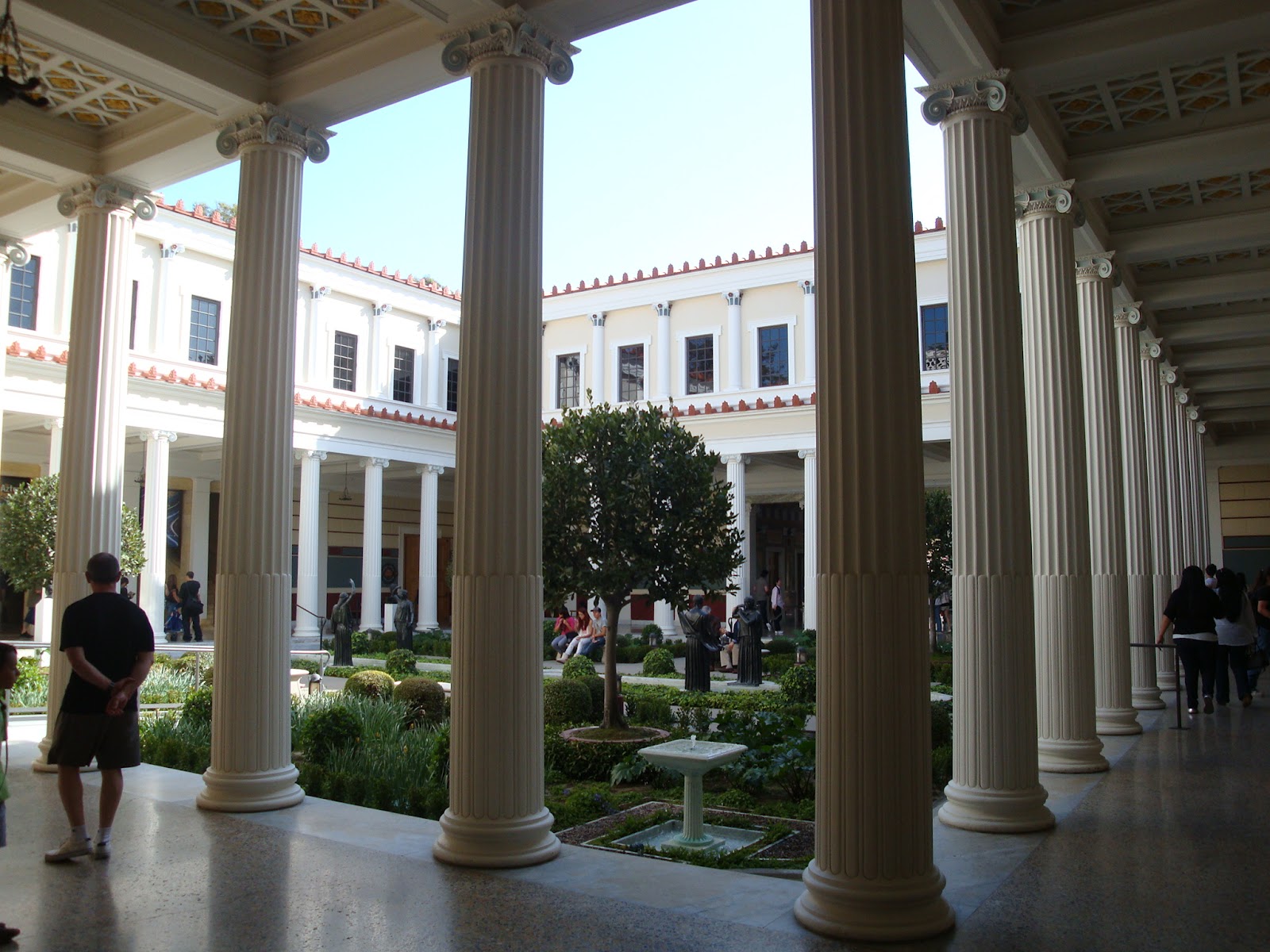
The attention to detail in the complex is amazing, right down to the mosaic on the atrium floor and the fresco in the outdoor peristyle. Each feature of the house takes its inspiration from different houses in Pompeii and Herculaneum, such as the House of the Fountain.
![]() |
| Jupiter |
| impluvium in the atrium |
| Central courtyard |
| Outer peristyle |
Thursday, 25 February 2010
culter -tri m. knife
Tuesday, 2 February 2010
declamatio -onis f. practice in public speaking
Tuesday, 5 January 2010
opus operis n. work
My first year Latin pupils completed a series of projects, the first of which was a Roman dinner party in the manner of ‘coquus –i’ below. The boys were introduced to Roman dining through a series of fun worksheets and, of course, through a sample of dishes made by yours truly. I prepared sweet wine cakes, cheese discs, honey biscuits, pates and grape juice, and rounded off the meal with dormice (aka marshmallow mice!).
In the middle term the boys studied some myths and legends and prepared posters and presentations on the Olympian gods and other deities. It was good for them to share their research with the class orally.
Discovery in Pompeii
As you and your team of archaeologists were digging through the ruins of Pompeii, you found a diary hidden in the rubble of the forum.
In groups of 2-3 choose five aspects of life in Pompeii and write one diary entry on each aspect. You must have at least five diary entries. Mention everyday events (e.g. family, friends, pets, food) and places in Pompeii.
Introduce where and how you found the diary, and whose diary it is. Write a conclusion to say how your diarist died.
I wanted them to research the lost city and present their findings in a more interesting way than just information under headings. We visited the school museum which holds a collection of classical artefacts donated by the British Museum in London. We looked at how the lamps, terra cotta statues, fragments of amphora and potsherds could be used to work out what ancient life was like.
The project worked really well, and the boys threw themselves into the research, writing and presentation of their diaries.
My next goal will be to theme these projects more constructively with the grammar sections so that all aspects of the ancient world (language and culture) tie in.Monday, 14 December 2009
disco discere didici - to learn
Magistra will be getting a new lease on life as I share my lesson ideas for teaching Latin. My focus has been on revitalising Latin and proving that it is not a dead language (it has just been very cunningly hidden for a while!). Latin is in fact all around us and it is just waiting to be revealed.
I am looking at creating a new series of worksheets and teaching aids that use all sorts of media for teaching Latin. I’d like to teach different grammar sections under classical culture themes, using documentaries, movies, slide shows, interactive group work, fun activities, excursions, dialogues, speeches, classroom posters, etc. The possibilities are endless!
Magistra will become a forum for sharing the lessons that I have already taught and for discussing any new ideas that flow in. I look forward to any feedback.
.jpg)